The Dangers of Elevator Down Times
When an elevator goes down, it can be a minor inconvenience or a major problem.
read article

If you manage a building on Long Island and you've ever wondered how an elevator company came up with the number on your service agreement, you're not alone. Most building owners sign without understanding what they're agreeing to. Then the elevator breaks down, the invoice shows up for something "not covered," and you realize the number wasn't a proposal. It was a trap.
I've been in this industry my entire life. Fourth generation. I've seen how the pricing game gets played, and I'm going to walk you through exactly how a service agreement should be priced so you know what to expect, what to push back on, and what it means when a company skips straight to the quote without asking a single question about your building.
There are four things that drive the price of a proper elevator maintenance contract: your goals, your building, your equipment, and the compliance and administrative requirements that come with all of it. If your current elevator company didn't cover all four before handing you a number, they weren't pricing to do the job. They were pricing to win it.
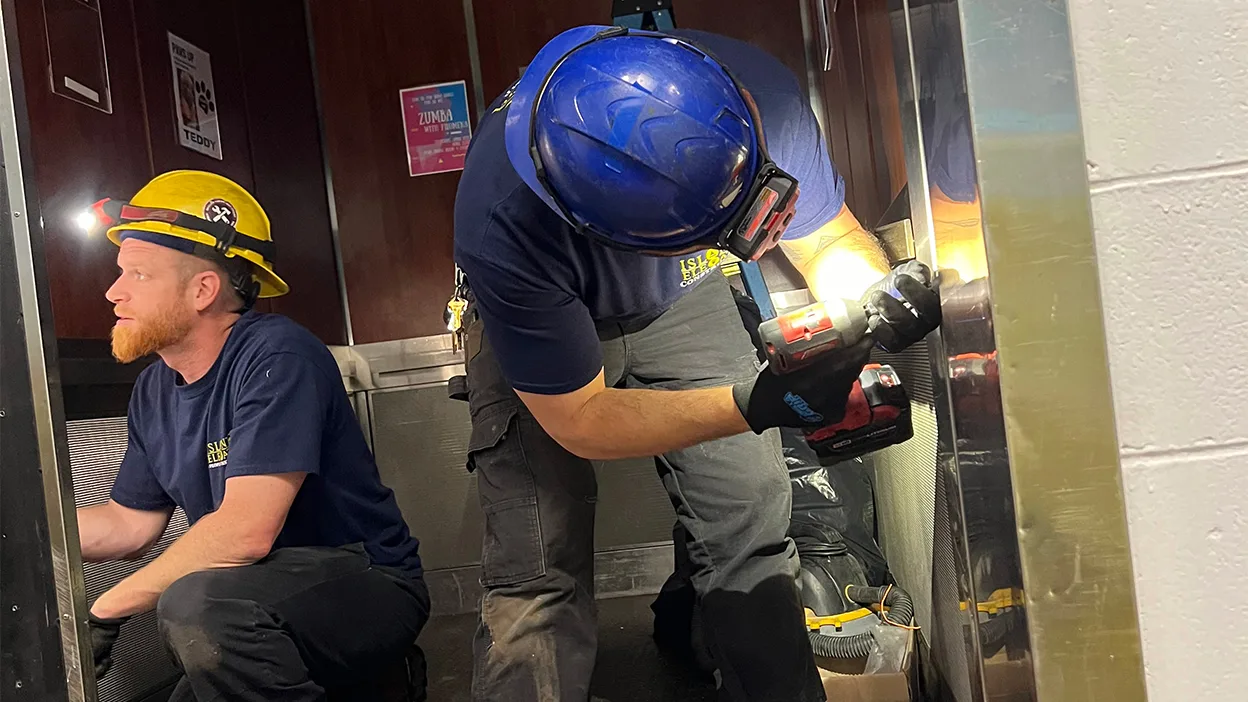
This is where we start. Every time. Before we look at a single elevator.
Most elevator companies skip this entirely. They walk in, look at the equipment, and hand you a number. That's not a service agreement. That's a guess dressed up as a proposal. And the gap between what they guessed and what the job actually costs? That shows up later, in emergency invoices, missed inspections, and elevators that break down at the worst possible moment.
The first thing we want to know is what matters to you. Are you focused on compliance, making sure you're never out of code with New York State or your local municipality? Is it safety, with zero tolerance for breakdowns or entrapments? Is it reliability, keeping tenants happy and downtime to an absolute minimum? Or is this primarily a cost conversation where you need coverage but you're working within a budget?
None of those answers are wrong. But they lead to very different contracts.
If compliance is your top priority, we build an agreement that front-loads testing schedules and inspection cycles. CAT1, CAT5, periodic inspections, all mapped out and accounted for upfront. If reliability is the driver, we're talking about visit frequency, parts availability, and response time. If you're budget-focused, we have an honest conversation about what's included, what isn't, and what that tradeoff looks like over time.
Here's what I always tell people: bring your current service agreement to the first meeting. Not to pick it apart, but because understanding what your existing company promised versus what they actually delivered is the fastest way to build something that actually works for you.
📺 Watch: How Do Elevator Companies Price Service Agreements? Part 1
This is the question most building owners don't know to ask until they've already been burned by the answer.
A properly scoped elevator maintenance agreement covers the full scope of keeping your elevator safe, compliant, and reliable. Not just the parts that are cheap and easy. That means routine preventive maintenance visits on a defined schedule, 24/7 emergency repair response, all required testing and inspections including CAT1 and CAT5, parts and labor for covered components, and clear documentation for every visit.
What it should also include, and often doesn't, is a termination clause. Most elevator contracts lock building owners in for years with no accountability built in. You're paying whether the service shows up or not. Every contract at Island Elevator includes a 30-day termination clause. If we're not earning your trust every month, you should be able to walk away. That's not a marketing line. It's how we operate across more than 1,300 units under service right now across Nassau and Suffolk County.
If you're looking at a contract that doesn't spell out exactly what's included, what's excluded, what testing is covered, and what your exit looks like, read it again. Carefully.
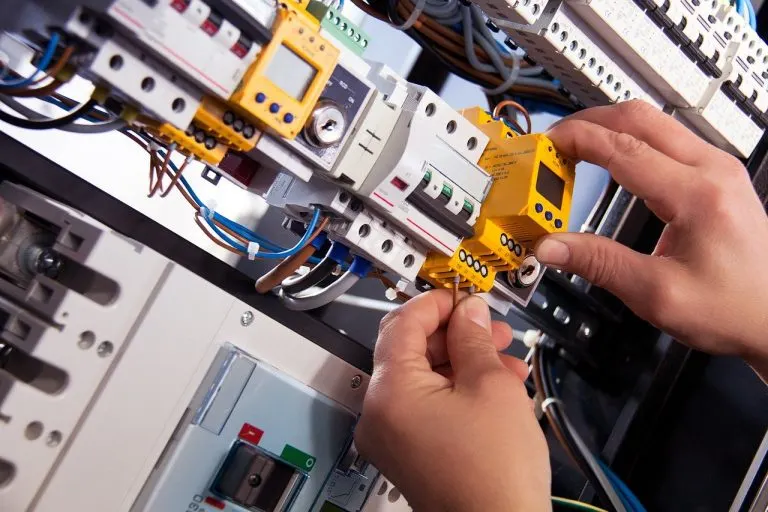
Once we know what you're trying to accomplish, we look at your building. Not just as a location, but as an environment your elevator is living in every single day.
A low-traffic office building in Melville puts a very different load on an elevator than a busy outpatient medical clinic in Mineola. More trips per day means more door cycles, more mechanical stress, and more opportunities for components to wear faster than a standard maintenance schedule assumes. High-traffic buildings typically need more frequent service visits and tighter monitoring of wear items, and a properly priced agreement reflects that.
Medical tenants bring heavy equipment: hospital beds, imaging carts, oversized freight. None of that is easy on doors, floors, or hydraulic systems. Industrial tenants move materials that a standard passenger elevator wasn't designed for. Catering halls run their elevators hard during peak events and barely touch them in between. Each situation calls for a different level of attention, and that attention has a real cost.
This one matters more than most people expect, especially here on Long Island.
If your building is near the water, Long Beach, Bay Shore, Sayville, Southampton, anywhere in the Hamptons, you're dealing with salt air. Salt accelerates corrosion on cables, electrical connections, and metal components. Elevators in coastal environments need more aggressive maintenance cycles and more frequent inspection of corrosion-prone parts. A company that doesn't account for this in your agreement isn't ignoring it because it doesn't matter. They're ignoring it because accounting for it eats into their margin.
Excessive humidity in elevator pits causes rust and premature failure of hydraulic seals. Industrial environments with airborne chemicals can degrade components at a rate that has nothing to do with normal wear. All of it affects how we structure your agreement, and all of it belongs in the price upfront.
📺 Watch: How Do Elevator Companies Price Service Agreements? Part 2

Now we look at the elevator itself. This is usually where other companies start. As you can see, it's step three.
These are two different questions, and both matter.
Age tells us what we're working with mechanically. Older systems have older parts, older controls, older hydraulic components. A 40-year-old elevator requires more attention than a 10-year-old one. That's not an opinion. That's how equipment works.
Condition tells us where we're actually starting from. A 30-year-old elevator that's been properly maintained is in a fundamentally different position than a 15-year-old elevator that's been neglected by a company pencil-whipping the maintenance log, showing up, signing off, and moving on without actually doing the work.
We see this constantly when buildings switch to Island Elevator. A property manager comes to us because their previous company wasn't performing, and when we get in there, we find months, sometimes years, of deferred maintenance. Components that should have been caught and replaced at a routine visit are now failing. One Long Island property manager found this out the hard way: their previous provider declared the elevator essentially unfixable. Our techs went in, assessed it properly, and had it back to full operating condition. The previous company either lacked the expertise or lacked the will. Either way, the building owner paid the price.
We do a full condition assessment before pricing any contract. We grade the equipment from excellent down to poor and tell you exactly what we found. No surprises later.
Traction elevators use overhead cable systems with counterweights and machine rooms, while hydraulic elevators run on fluid systems and power units. The two are maintained differently. Passenger elevators have different compliance requirements than freight elevators. Buildings with a mix of both require expertise across all of it. With 10+ QEI-Certified personnel and 1,300+ units currently under service contract, we've worked on every configuration Long Island throws at us.
More elevators mean more scope, but there are efficiencies that come with servicing multiple units in the same building, and a well-structured agreement reflects both sides of that.
More floors means more doors. Every floor is another set of door rollers, tracks, interlocks, and operators, all of which need regular lubrication, adjustment, and eventual replacement as wear accumulates. A 20-story building has substantially more door-related maintenance exposure than a 4-story one. That's physics, not a negotiating point.
📺 Watch: How Do Elevator Companies Price Service Agreements? Part 3
This is the step that separates companies pricing to do the job from companies pricing to win it.
Not all elevators carry the same testing obligations. CAT1 testing is required annually. CAT5 is a full-load safety test required every five years, and for high-capacity freight elevators, that can mean coordinating and bringing in weight carts loaded with thousands of pounds just to satisfy the requirement. The labor and logistics to execute it are real costs. All of it should be in your service agreement. If it's not, it'll show up as an add-on invoice the year CAT5 testing comes due. That's not a billing error. That's how some companies intentionally structure their pricing.
This one surprises people. Building access requirements vary enormously across Long Island, and they affect the real cost of every service visit.
Industrial facilities may require technicians to wear full protective equipment before entering. Secure buildings may require sign-ins, background checks, or escorted access to machine rooms. Rooftop machine rooms in mid-rise buildings require different logistics than ground-floor hydraulic pits. Some municipalities have specific requirements for contractor access to certain building types.
Time spent suiting up, signing in, or waiting for an escort is time not spent maintaining your elevator. A properly priced agreement builds that time in. One that doesn't will find a way to bill you for it later.
New York State has baseline documentation requirements for elevator maintenance and testing. But many Long Island towns, villages, and municipalities stack additional requirements on top of those. Specific inspection report formats, extra filings, documentation that goes beyond the standard state forms. Your building's ownership or management structure may add further requirements as well: purchase orders, itemized invoices, specific service report formats.
Every layer of administrative work adds time. Time is what you're paying for in a maintenance agreement. We account for all of it before we quote. That's why our numbers take longer to produce than those from companies that walk in and hand you a figure before asking a single question.
📺 Watch: How Do Elevator Companies Price Service Agreements? Part 4
Whether you're renewing or evaluating a new provider, these are the questions that need real answers before you sign anything.
Did they ask about your goals before quoting? If a company walked in, looked at your elevator, and handed you a number, they built a price to win a contract, not support a building. That gap will cost you.
Did they assess your building's environment, not just your elevator? Coastal exposure, humidity, tenant type, traffic volume, all of it affects the real cost of proper preventive maintenance. If it wasn't discussed, it wasn't accounted for.
Did they perform a documented condition assessment? A proper review tells you what you're inheriting and what the agreement is being built around. No assessment means no baseline, and no accountability when things go wrong.
Does the contract spell out what's included and what isn't? CAT1, CAT5, emergency response, parts coverage, administrative requirements, every one of those should be defined, not implied.
Is there a termination clause? You should be able to leave if they're not performing. That should be in writing with a defined notice period. Anything longer than 30 days is a red flag.
Elevator service pricing on Long Island isn't arbitrary, but it is complex. A legitimate agreement accounts for your goals, your building's environment, your equipment's condition, and every compliance and administrative requirement that comes with it.
Companies that skip those steps aren't giving you a deal. They're giving you a starting point before the real billing begins. You'll see it in deferred maintenance, missed inspections, and elevators that fail when your tenants need them most.
We price to do the job. Not to win the job. There's a difference, and eventually, with every other elevator company, you feel it.
If you're ready to see what a properly scoped elevator service agreement actually looks like for your building, bring us your current contract. We'll tell you exactly what's in it, what's missing, and what it would take to do it right.
Island Elevator serves building owners and property managers across Nassau and Suffolk County, from Albertson to Yaphank, from Long Beach to Riverhead. We maintain 1,300+ units across 115+ Long Island towns and we price every contract the same way: starting with your goals, working through your building and equipment, and accounting for every requirement before we put a number on paper.
Island Elevator is here to help you understand all facets of your Elevator Repair, Maintenance, & Modernization costs in the new year. Our team is here to help ensure your home and business vertical transportation equipment receive the regularly scheduled maintenance necessary to help you avoid a major catastrophe, reduce the possibility of a costly repair, and ensure the safety of your passengers, tenants, and family.
When an elevator goes down, it can be a minor inconvenience or a major problem.
read article
If you own or manage a commercial building, you may be considering the installation ...
read article
Hydraulic elevators are a staple of today’s commercial buildings and structures.
read article
get a free estimate